Bankruptcy

This page provides information on the procedure for declaring bankruptcy.

What is bankruptcy?

Debt enforcement through bankruptcy proceedings is a procedure used when a person or company registered in the Commercial register is no longer able to pay debts. At the request of one or more creditors, the court may declare bankruptcy, which results in the forced sale of the debtor's assets.

This procedure aims to liquidate (sell) the assets of the insolvent person or the bankrupt company in order to distribute the money obtained among the creditors. It is managed by the Office des faillites.

What are the different types of bankruptcy?

There are several paths that can lead to bankruptcy for a debtor.

The most common is ordinary bankruptcy as provided for in Article 159 et seq. of the Federal Act on Debt Enforcement and Bankruptcy (DEBA). Other, more complex cases, such as bankruptcy without prior debt enforcement proceedings (Art. 190 DEBA) or bankruptcy following debt enforcement proceedings based on a bill of exchange (Art. 177 DEBA), often require legal knowledge and the assistance of a lawyer.

What actions need to be taken to apply for ordinary bankruptcy?

  1. Summons for payment : the creditor lodges a claim for enforcement with the Debt Enforcement Office and the debtor receives a summons for payment.
     
  2. Upon receipt of the summons for payment, the debtor may lodge an objection to it.
     
  3. The creditor may secure  the removal of the opposition by lodging an application with the Tribunal de première instance.
     
  4. Bankruptcy warning (formal warning) : If the debtor fails to pay or does not contest the enforcement proceedings, the creditor may apply to the Debt Enforcement Office to have the proceedings continued. The Debt Enforcement Office then issues a bankruptcy warning (a formal notice informing the debtor that bankruptcy proceedings may be initiated if the debt is not paid). The Office sends this formal notice, which sets a 20-day deadline for settling the debt.
     
  5. Request to open bankruptcy proceedings : the creditor may file a bankruptcy application with the Court of First Instance (Civil Division), 20 days at the earliest after notification of the bankruptcy warning and no later than 15 months after the service of the summons for payment. This period is suspended while a removal of the objection procedure is ongoing.

How can the debt be settled before a bankruptcy order is made? The debtor may settle his or her debt at any time with the Debt Enforcement Office prior to the court hearing, including the costs of the proceedings, in order to avoid bankruptcy proceedings being initiated.

What are the consequences of a bankruptcy ruling? A bankruptcy ruling results in the seizure and liquidation of the debtor's assets by the Bankruptcy Office, with a view to distributing the assets among the creditors. The bankrupt party no longer has free disposal of their assets.

How to file for ordinary bankruptcy ?

Step 1: Submit your application

The creditor must submit the application in writing and send it to the Court of First Instance by post or by handing it at the court counter or the greffe universel, in duplicate. It must be written in French and signed.

Documents to be attached (in duplicate):


  • The summons for payment (front and back),
  • The bankruptcy warning (front and back),
  • Any document useful in the event of bankruptcy without prior debt enforcement proceedings (unpaid invoices, extract from the debt enforcement register, proof that the debtor cannot be found, etc.).

The creditor may act on his/her own behalf or with the assistance of a solicitor.


Step 2: Pay an advance on costs

You will be asked to pay an advance on costs. The amount depends on the amount of the claim (Art. 48 FeeO-DEBA).

For ordinary bankruptcies (Art. 159 DEBA):

Value in dispute in francs

Fee in francs

Up to 1'000

40 - 150

More than 1'000 And not exceeding 10'000

50 - 300

More than 10'000 And not exceeding 100'000

60 - 500

More than 100'000 And not exceeding 1'000'000

70 - 2'000

More than 1'000'000

500 - 4'000


An additional advance may be requested to cover other costs (publication in the FAO, interpreter’s fees, etc.)

If you do not have the necessary financial resources, you can apply legal aid.


Step 3: Hearing

As a general rule, the Court of First Instance summons both parties to a hearing (oral proceedings).

The debtor may act on his/her own behalf or with the assistance of a solicitor.

At the end of the hearing, the court issues its decision.


Step 4: notification of the decision

The decision will be sent to you by post or via your solicitor (lawyer).

What are the costs of the proceedings?

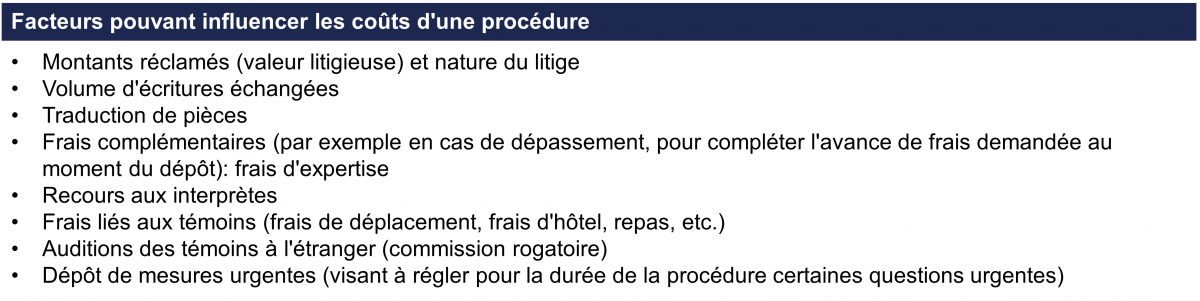
The costs of the proceedings include court costs (in particular fees), which are covered by the advance payment, as well as legal costs, which constitute a contribution to the legal fees of the opposing party’s solicitor. If a party instructs a solicitor, this will result in additional costs, which are separate from the court costs.

Below you will find the court costs for bankruptcy proceedings. Please note that these costs only relate to court fees and do not include other types of costs that may arise during the proceedings, such as interpreter fees or expert opinions requested by the court.

Further information concerning the costs of civil proceedings


Fees for ordinary bankruptcy proceedings in francs

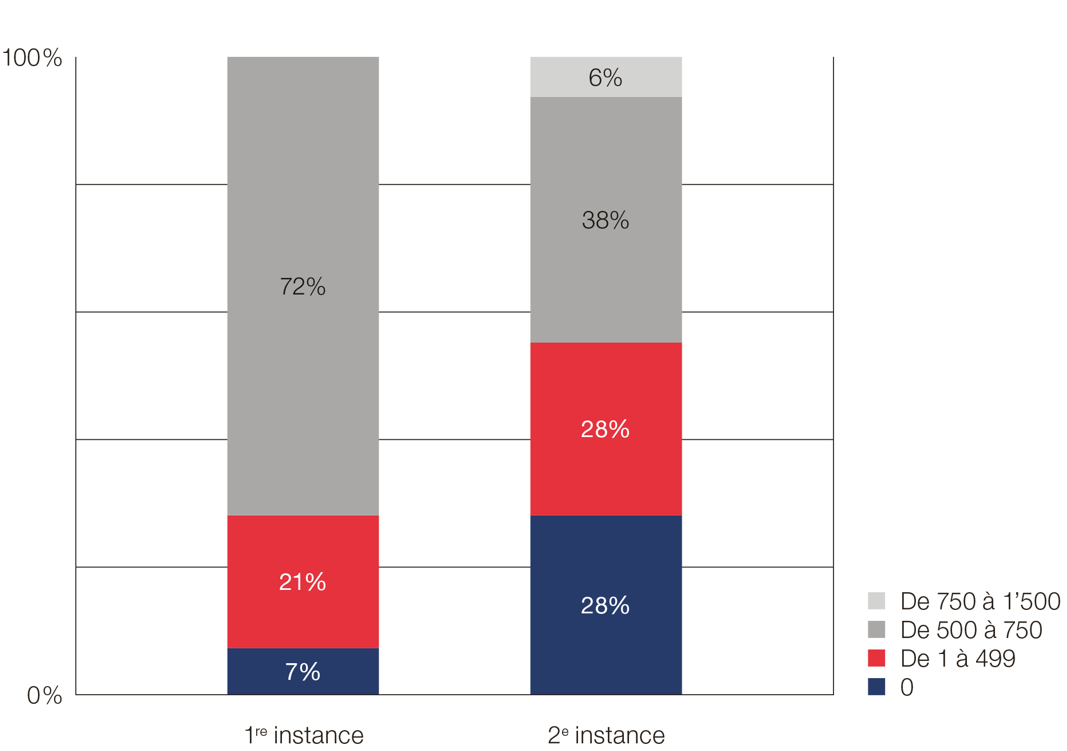
Advances on costs in these proceedings range from CHF 40.- to CHF 150.-, depending on the value in dispute.

Depending on the course of the proceedings and the outcome of the dispute, the costs of the proceedings set by the court may sometimes be lower or higher than this range.


Fees for bankruptcy proceedings without prior debt enforcement proceedings in francs

Fees for bankruptcy proceedings without prior debt enforcement proceedings in francs

Advances on costs in these proceedings range from CHF 50 to CHF 500, depending on the value in dispute.

Depending on the course of the proceedings and the outcome of the dispute, the procedural costs set by the court may sometimes be lower or higher than this range.

How long does a procedure take?

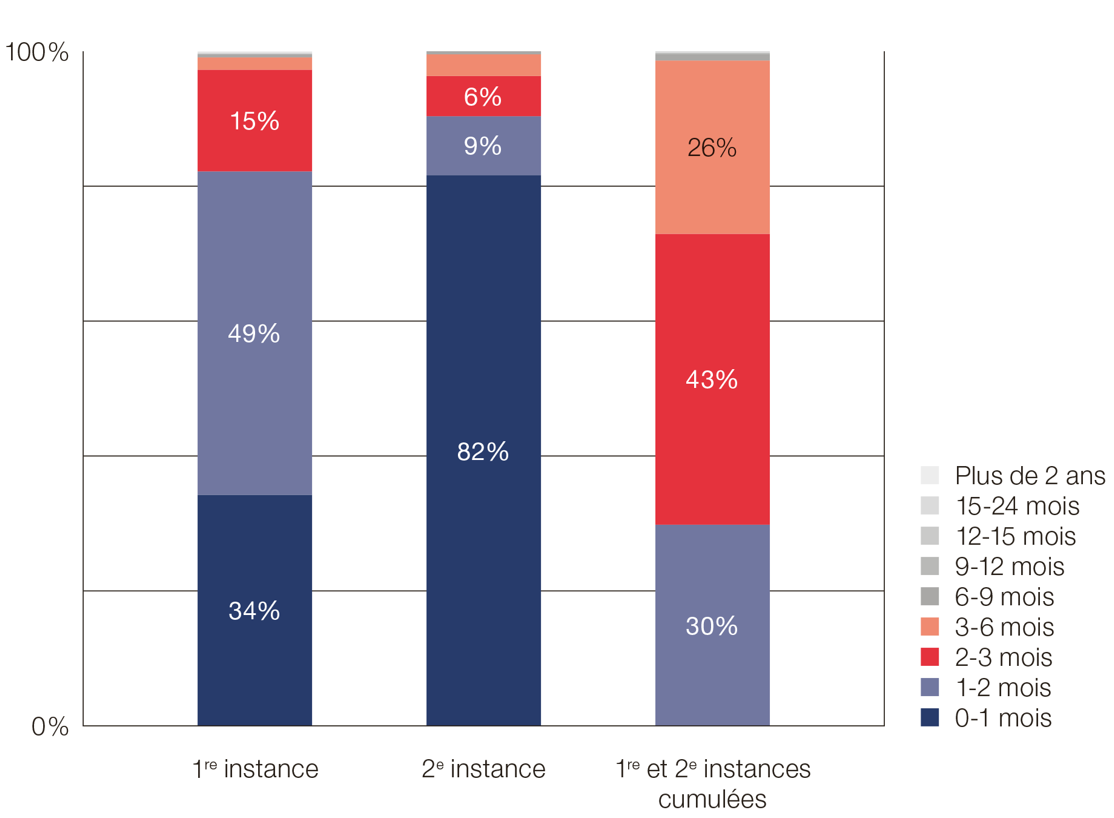
The duration of an ordinary bankruptcy procedure

  • In the first instance, more than 80% of procedures are completed in less than 2 months.
  • In the second instance, more than 80% of procedures are also completed in less than 1 month.
     

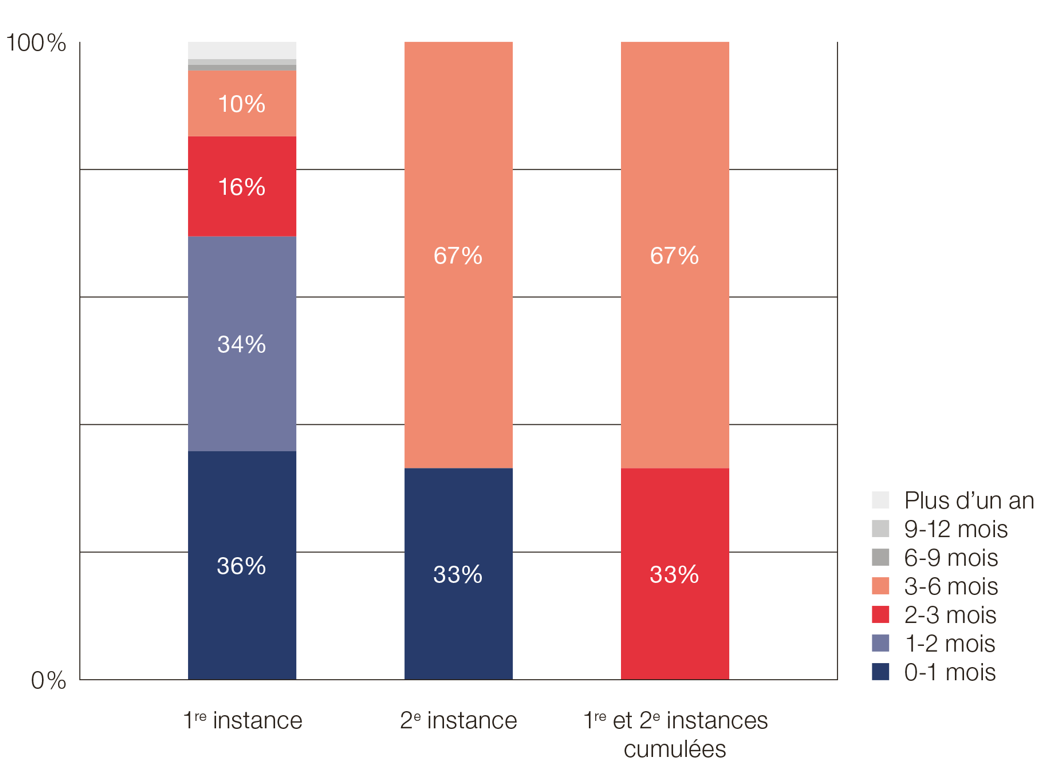
The duration of bankruptcy proceedings without prior debt enforcement proceedings 

    • At first instance, more than 85% of proceedings are completed in less than 3 months.
    • At second instance, they are generally completed in less than 6 months.

    Frequently Asked Questions

    This FAQ which sets out the questions most frequently addressed to the greffe des faillites et concordats of the Tribunal de première instance, together with the answers provided, is intended solely to assist persons subject to judicial proceedings by offering them an initial practical guidance. It is not exhaustive and it is not intended to replace the information that should be sought from legal professionals.

    No. The creditor’s presence is not compulsory. It is, however, recommended if the creditor has additional documents to submit. As the court is required to rule even in the absence of the parties and on the basis of the documents submitted to it, it will deliver its judgement even if the creditor does not appear at the hearing.

    No. The debtor’s presence is not compulsory.
    It is, however, recommended if the debtor has documents to submit (e.g. a receipt of payment from the debt enforcement Office). As the court is required to rule even in the absence of the parties and on the basis of the documents submitted to it, it will deliver its judgement even if the debtor does not appear at the hearing

    It is essential to attach the bankruptcy warning and the summons for payment (art. 166, para. 1 LP).

    The unpaid debt certificate must also be attached where the creditor has obtained a bankruptcy warning on the basis of such a certificate issued following a previous debt enforcement proceedings.

    Where the summons for payment has been contested and dates back more than 15 months, the removal of the objection decision, certified as final and enforceable, must also be attached so that the court can verify compliance with the time limit laid down in art. 166, para. 2 LP.


    Yes. the court is not notified by the creditor of a payment.

    Only the production of a ‘receipt for full payment’ issued by the debt enforcement Office constitutes proof of payment prior to the hearing. This receipt must be produced by the debtor no later than at the hearing itself. It may also be submitted to the court prior to the hearing, in which case attendance at the hearing is optional
     

    Yes. The court is not notified by the debt enforcement Office of a payment.

    Only the production of a ‘receipt for full payment’ issued by the debt enforcement Office constitutes proof of payment prior to the hearing. This receipt must be produced by the debtor no later than at the hearing itself. It may also be submitted to the court prior to the hearing, in which case attendance at the hearing is optional.

    The full amount of the debt claimed in the proceedings, comprising the capital and interests, must be paid, together with the costs of the proceedings and the legal costs incurred as a result of the request to open bankruptcy proceedings.

    The receipt for full payment issued by the debt enforcement Office sets out the items paid and serves as proof of payment

    You must never make a payment to the court. At this very late stage of the enforcement proceedings (once the bankruptcy hearing has been scheduled), payment must be made exclusively to the debt enforcement Office by going there in person.

    Payment to the creditor or to the debt enforcement Office by bank transfer is not recommended, as the debtor will then not know the amount of the court costs incurred by the bankruptcy proceedings and will not necessarily be aware of the exact status of the debt (in particular, the details of late payment interests or enforcement costs).

    It is recommended that the debtor attend the hearing and hand the receipt for full payment to the judge at that time, thereby ensuring that this essential document is duly received by the Court at the time of the hearing.

    If the debtor is unable to attend the hearing, she/he may also submit the receipt at least 48 hours before the hearing at the greffe of the Tribunal de première instance : 6-8 rue de l’Athénée, 1205 Genève opening hours  9h-12h / 13h30-16h.

    A party may be represented by an adult third party (an employee or a relative) or by a professional representative, such as a solicitor, holding a power of attorney. Such representation is, however, by no means compulsory, and the party summoned may always attend in person.

    No. Insofar as a party may always be represented at the hearing by a third party holding a power of attorney, the submission of a medical certificate of incapacity for work does not justify the adjournment of the hearing.

    In such cases, it is therefore necessary to appoint a third party in possession of a power of attorney to attend the hearing on behalf of the party who is unable to attend for health reasons.

    A creditor who has entered into a payment arrangement with her/his debtor needs only notify the court, prior to the hearing, of the withdrawal of her/his request to open bankruptcy proceedings.

    You must not apply for the hearing to be adjourned, as this will be refused as the court must rule immediately on the request to open bankruptcy proceedings. Nor should you apply for the proceedings to be suspended, as this will also be refused.

    No. All the creditor needs to do is to submit, at least one month after withdrawing the request, a new request to open bankruptcy proceedings with the court, accompanied by the same documents as those attached to the first request and the documentary evidence that the debtor has failed to fulfil her/his previous obligations.

    You can proceed in this way provided that the summons for payment which gave rise to the enforcement proceedings was issued no more than 15 months prior to the new request to open bankruptcy proceedings.

    The answer depends on the type of organisational defects identified.

    You must contact the commercial registry Office, which is the only body authorised to certify to the Court that the legal situation has been restored, whether this involves the designation of a failing body (for example, the absence of a director or manager domiciled in Switzerland, or the absence of an audit body) and which will inform the company of the steps to be taken.

    No as the opting-out cannot have retroactive effect.

    It is therefore essential first to have all accounts audited where this has not been done since the removal of the audit firm, and then to submit these audited accounts, prepared by a certified auditor, to the commercial registrry whilst simultaneously applying for an opting-out, applicable exclusively for the future.

    If there are several directors (members of the board of directors or managing partners) registered as such in the commercial registry, the decision of the board of directors or the board of managers to notify the overindebtedness judge must be provided.

    Otherwise, a notice from a director or the sole manager is sufficient.

    Furthermore, in all cases, it is necessary to produce financial statements (balance sheet and profit and loss account) audited by a certified auditor and calculated at least at liquidation value.

    See also

    Greffe de l'assistance juridique

    Legal aid is a financial aid granted under certain conditions.

    Civil law branch

    Mediation

    Mediation is a conflict resolution process in which a mediator, who is a neutral, impartial and independent third party, facilitates communication between the protagonists and helps them to find a fair and lasting solution to their conflicts by themselves.

    Legal advice service and legal counsels

    The Judiciary Power does not provide legal advice. You can contact the following associations and organizations.