Bankruptcy

This page provides information on the procedure for declaring bankruptcy.

What is bankruptcy?

Debt enforcement through bankruptcy proceedings is a procedure used when a person or company is no longer able to pay debts. At the request of one or more creditors, the court may declare bankruptcy, which results in the forced sale of the debtor's assets.

This procedure aims to liquidate (sell) the assets of the insolvent person in order to distribute the money obtained among the creditors. It is managed by the Office des faillites.

What are the different types of bankruptcy?

There are several paths that can lead to bankruptcy for a debtor.

The most common is ordinary bankruptcy as provided for in Article 159 et seq. of the Federal Act on Debt Enforcement and Bankruptcy (DEBA). Other, more complex cases, such as bankruptcy without prior debt enforcement proceedings (Art. 190 DEBA) or bankruptcy following debt enforcement proceedings based on a bill of exchange (Art. 177 DEBA), often require legal knowledge and the assistance of a lawyer.

What actions need to be taken?

  1. Summons for payment: the creditor initiates proceedings with the debt enforcement Office and the debtor receives an order to pay.
     
  2. Bankruptcy warning (formal warning): if the debtor does not pay or contest the proceedings, the creditor may request that the Debt Enforcement Office issues a bankruptcy warning (a formal warning to the debtor that bankruptcy proceedings may be initiated if the debt is not paid). The office sends this formal notice, which sets a deadline of 20 days to settle the debt. If the debtor has lodged an objection, the creditor must request the removal of the objection.
     
  3. Bankruptcy application: the creditor may file a bankruptcy application with the Court of First Instance (Civil Division) no earlier than 20 days and no later than 15 months after notification of the bankruptcy warning. This period is suspended while a removal of the objection procedure is ongoing.
     

How can the debt be settled before bankruptcy is declared? The debtor may settle the debt at any time with the debt enforcement Office before the court's decision, including procedural costs, to avoid bankruptcy proceedings.

What are the consequences of a bankruptcy ruling? A bankruptcy ruling results in the seizure and liquidation of the debtor's assets by the Bankruptcy Office, with a view to distributing the assets among the creditors. The bankrupt party no longer has free disposal of their assets.

How to file for bankruptcy?

Step 1: Submit your application

The creditor must submit the application in writing and send it to the Court of First Instance by post or by handing it at the court counter or the greffe universel, in duplicate. It must be written in French and signed.

Documents to be attached (in duplicate):


  • The summons for payment (front and back),
  • The bankruptcy warning,
  • Any document useful in the event of bankruptcy without prior debt enforcement proceedings (unpaid invoices, extract from the debt enforcement register, proof that the debtor cannot be found, etc.).

The creditor may act on his/her own behalf or with the assistance of a solicitor.


Step 2: Pay an advance on costs

You will be asked to pay an advance on costs. The amount depends on the amount of the claim (Art. 48 FeeO-DEBA).

For ordinary bankruptcies (Art. 159 DEBA):

•    Up to CHF 1'000.-: CHF 40.- to CHF 150.-

•    From CHF 1'001.- to CHF 10'000.-: CHF 50.- to CHF 300.-

•    Over CHF 10’000: CHF 60.- to CHF 500.-

For bankruptcies without prior debt enforcement proceedings (Art. 190 DEBA):

• Up to CHF 10'000.-: CHF 50.- to CHF 300.-

• Over CHF 10’000: CHF 60.- to CHF 500.-

If you do not have the necessary financial resources, you can apply legal aid.
 

Step 3: Hearing

As a general rule, the Court of First Instance summons both parties to a hearing (oral proceedings).

The debtor may act on his/her own behalf or with the assistance of a solicitor.

At the end of the hearing, the court issues its decision.


Step 4: notification of the decision

The decision will be sent to you by post or via your solicitor (lawyer).

What are the costs of the proceedings?

The costs of the proceedings include court costs (in particular fees), which are covered by the advance payment, as well as legal costs. If a party instructs a solicitor, this will result in additional costs, which are separate from the court costs.

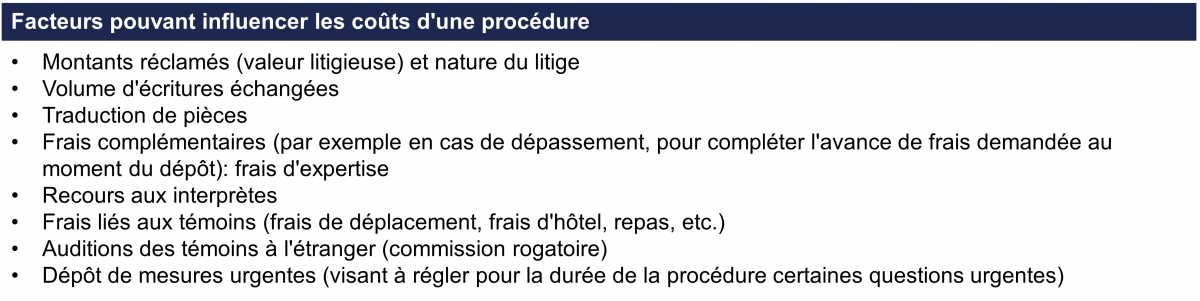
Below you will find the court costs for bankruptcy proceedings. Please note that these costs only relate to court fees and do not include other types of costs that may arise during the proceedings, such as interpreter fees or expert opinions requested by the court.

Further information concerning the costs of civil proceedings


Fees for ordinary bankruptcy proceedings in francs

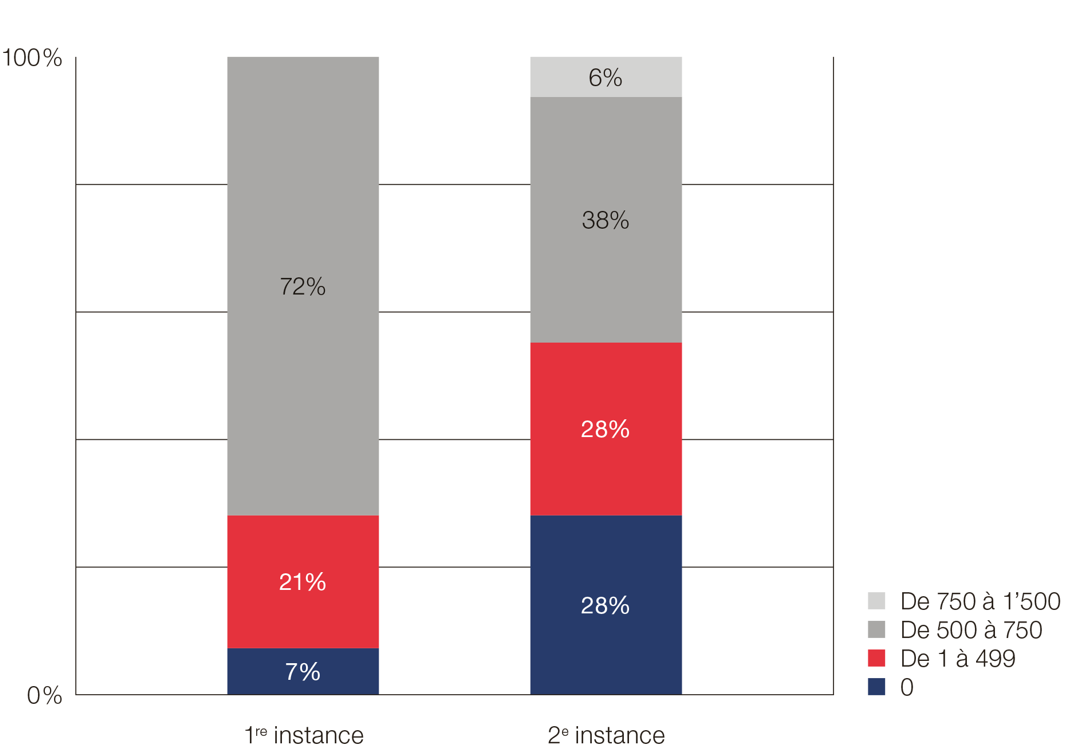
Advances on costs in these proceedings range from CHF 40.- to CHF 150.-, depending on the value in dispute.

Depending on the course of the proceedings and the outcome of the dispute, the costs of the proceedings set by the court may sometimes be lower or higher than this range.

For example :

  •  If a claim has been declared inadmissible, the court may set costs lower than CHF 40.-.
  • If the advance payment was CHF 500.-, but publication in the Feuille d'avis officielle (FAO) was necessary, the final costs may be higher than the advance payment made


Fees for bankruptcy proceedings without prior debt enforcement proceedings in francs

Fees for bankruptcy proceedings without prior debt enforcement proceedings in francs

Advances on costs in these proceedings range from CHF 50 to CHF 500, depending on the value in dispute.

Depending on the course of the proceedings and the outcome of the dispute, the procedural costs set by the court may sometimes be lower or higher than this range.

For example:

  • If a claim has been declared inadmissible, the court may set costs lower than CHF 50.
  • If the advance payment was CHF 500, but publication in the Feuille d’avis officiel (FAO) was necessary, the final costs may be higher than the advance payment made.

How long does a procedure take?

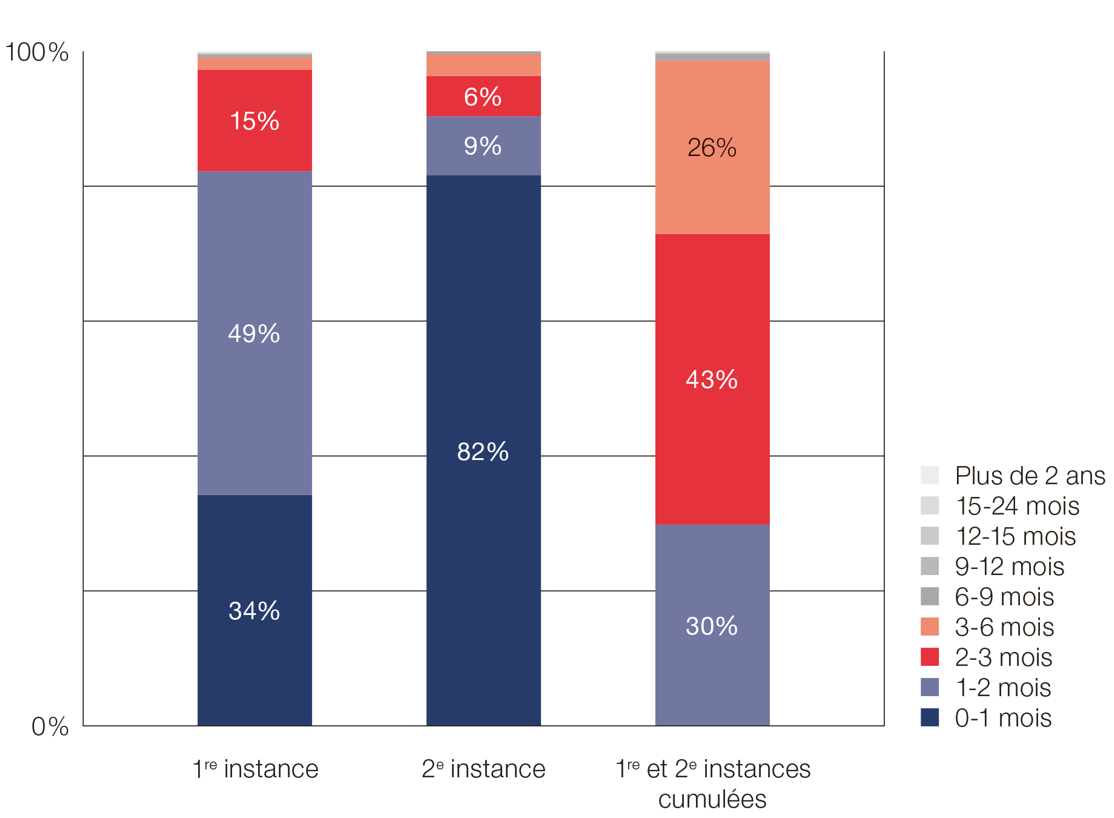
The duration of an ordinary bankruptcy procedure

  • In the first instance, more than 80% of procedures are completed in less than 2 months.
  • In the second instance, more than 80% of procedures are also completed in less than 1 month.
     

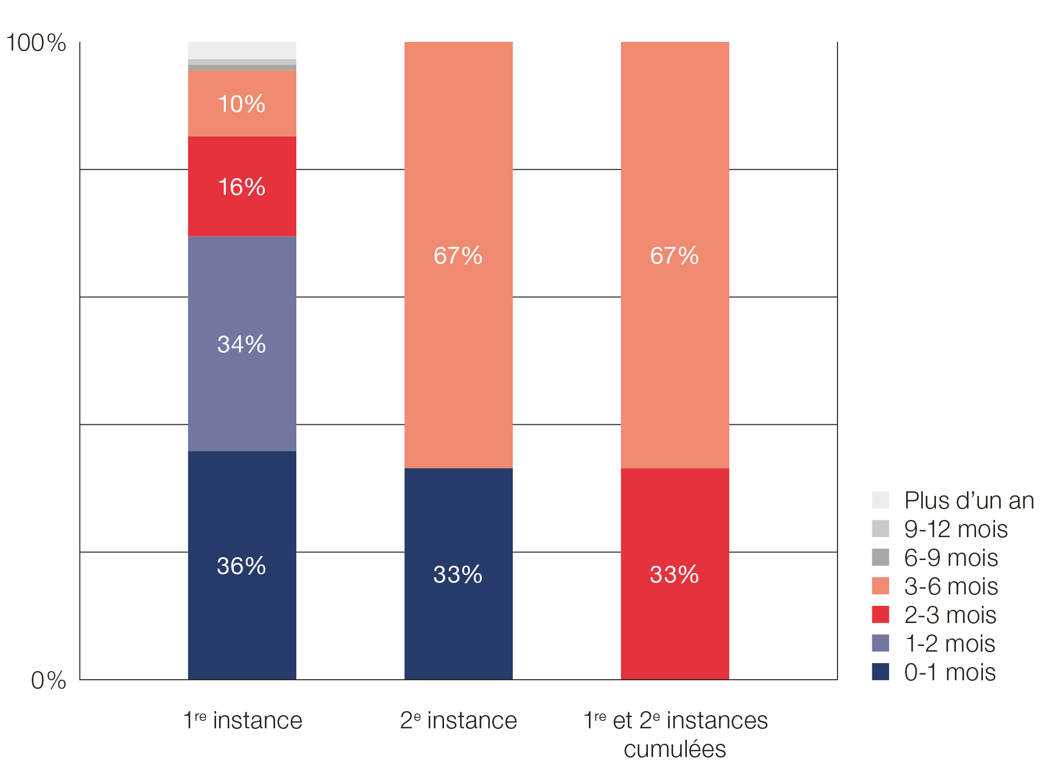
The duration of bankruptcy proceedings without prior debt enforcement proceedings 

    • At first instance, more than 85% of proceedings are completed in less than 3 months.
    • At second instance, they are generally completed in less than 6 months.

    See also

    Greffe de l'assistance juridique

    Legal aid is a financial aid granted under certain conditions.

    Civil law branch

    Mediation

    Mediation is a conflict resolution process in which a mediator, who is a neutral, impartial and independent third party, facilitates communication between the protagonists and helps them to find a fair and lasting solution to their conflicts by themselves.

    Legal advice service and legal counsels

    The Judiciary Power does not provide legal advice. You can contact the following associations and organizations.